September marks the end of long summer days and weekends at the beach, but it also brings a return to more practical concerns: back-to-school lists, reinstated routines and, as I recently discovered, National Preparedness Month. That was news to me, but it prompted a useful question: How prepared were we, really? We owned emergency supplies — but did we know where everything was? Did it all work? What would actually happen if we had to use it?
I thought spending 24 hours living from our emergency supplies would tell me whether we had enough. Instead, it revealed how many assumptions were hiding inside the word prepared.
I should say upfront what this isn't. This isn't about a grid-down world, growing your own food, or figuring out sanitation without plumbing. Those are real concerns for some people, and I have real respect for anyone thinking that far ahead. But for us, the realistic version of "prepared" is something more like: a few days to a couple of months without power or water, the kind of disruption a bad storm or a strained grid can actually cause, before things get fixed or help arrives. Planning for that doesn't require a bunker. It requires knowing what you have, whether it works, and whether you'd actually want to use it.
For one day, my husband and I behaved as though the power and running water were unavailable, using the food, water, lighting, charging equipment and other provisions we'd stored for an outage. This wasn't a wilderness-survival exercise. I wanted to know how well we had planned and whether our preparations would carry us comfortably through the sort of disruption that's far less dramatic — and far more likely.
On paper, we were well supplied: water, shelf-stable food, power banks, lanterns, several ways to heat a meal. But a list of possessions isn't the same thing as a functioning system. Within 24 hours, we found equipment that did less than we thought, food we didn't want to eat, and ordinary routines we'd failed to account for at all.
The good news: this was only a test. We were able to find the weak spots while the lights were still on — and then fix them.
I stopped pretending we could preserve the refrigerator
For years I'd kept a very large portable power bank among our emergency supplies — about 25 pounds, convincingly industrial, sold as capable of powering appliances like coffee makers and small refrigerators. It can also charge smaller devices and jump-start a car. I'd never tested it on a refrigerator.
Connected to a small dorm-sized refrigerator/freezer combo we have upstairs for water and snacks and use for additional storage during the holidays — not even our full-size refrigerator — it lasted about 15 minutes.
So that's not a refrigeration plan. I've researched conventional and solar generators, but I don't currently want the noise, fuel management, expense or maintenance of a system large enough to keep our full refrigerator and freezers running through an extended outage. For now, our honest plan is to assume we'll eventually lose our refrigerated and frozen food.
What changed: We no longer count the large power bank as refrigerator backup — it's assigned to the jobs it can actually do: charging devices and jump-starting a car. Our food plan begins with the assumption that refrigeration may be unavailable.
I replaced "emergency food" with meals
We broke out some of the dehydrated meal sets we had purchased which are marketed for emergencies. Technically edible, compact, long-lasting. We discovered we didn't like them.
Obvious in retrospect — an extended outage is not the moment reconstituted chicken pot pie becomes more appealing. If anything, an unfamiliar, disappointing meal feels more dispiriting when the house is dark and the usual conveniences are gone.
The shelf-stable food that worked best was food we already enjoy: ramen; pre-cooked rice cups and boxed rice; canned tuna and salmon; canned chicken; beef stew; soup, chili, canned beans, and canned vegetables; pasta with jarred sauce; some of the instant potatoes; shelf-stable condiments and sauces, dried vegetables to reconstitute into a meal. These all become recognizable combinations rather than a succession of products labeled "emergency." Chicken with sauce (curry or cream of something) and vegetables over rice felt familiar and like dinner.
We also have several ways to heat water and food if the usual cooktop is unavailable — equipment approved for its setting, as well as an outdoor grill. The test reinforced that every fuel-burning appliance has to be used strictly per its manufacturer's instructions. A generator, camp stove or grill isn't an indoor appliance just because it's raining outside.
What changed: We're now organizing the pantry around complete meals we genuinely eat, not the abstract category of "emergency food." Anything new gets tested before we buy more of it.
A gallon of water becomes very small when it has several jobs
We store roughly a gallon of water per person per day, in containers I can carry myself — I prefer that to a huge barrel that's difficult to move or use. What I hadn't considered was how many demands would land on each gallon.
Drinking is only the beginning. Water is also needed for coffee and tea, cooking, brushing teeth, washing faces, bathing, cleaning dishes and, during a longer disruption, washing some clothing. Once those uses start competing, a gallon doesn't look particularly abundant.
We heated a small amount for washing, and a warm sponge bath, clean face and brushed teeth restored a surprising amount of normalcy. We wouldn't wash our hair daily in an extended outage, but could plan to do it occasionally rather than discovering the problem once already uncomfortable. I also added a simple washboard — no electricity needed, and clothes can be hung to dry.
What changed: Our water plan now includes hygiene, cooking and cleanup, not just drinking. We added a washboard and a more realistic routine for washing ourselves, our dishes and essential clothing.
Redundancy mattered more than one impressive device
The equipment that made the day easiest was simple and overlapping. We have rechargeable bulbs that screw into ordinary lamps, so rooms still look and function somewhat normally. We have collapsible solar lanterns that give a warm, candlelike light but can also get quite bright — light enough to carry or hang anywhere. We've used them at Tanglewood picnics, along the walkway on Halloween, and during actual outages when someone needed to go into the basement.
Solar equipment is only useful once it's charged, which is why we also keep rechargeable or battery-operated lanterns, along with power banks for phones. If one source is depleted or unavailable, another can cover the gap. The same goes for cooking — we don't need six elaborate versions of the same solution, but we do need more than one safe, tested way to heat water and prepare a basic meal.
What changed: We checked what was charged, what required batteries, and what could be powered from the car. Our plan no longer depends on a single device performing exactly as advertised.
I had prepared to charge our phones, but not to live without them
The most revealing habit of the day required no equipment at all: I kept reaching for my phone — for information, messages, music, entertainment, almost without thinking. We had power banks, so I'd treated phone charging as the entire problem. But a charged phone is only useful if the network behind it is working. During a widespread outage, we realized that home Wi-Fi may be down, cellular service congested or interrupted, and streaming or even ordinary calls and messages can't be assumed to work normally.
Downloaded material stays available while the battery lasts, so we're creating a small offline collection of music and audiobooks — reserving a few specifically for an outage, unlistened-to in advance, so opening that stash feels less like making do and more like the start of an occasion.
We're also assembling analog entertainment we genuinely enjoy: books we want to read, craft projects ready to begin, games and puzzles. A crank radio gives us another source of information and music, and we may add some audiobooks on CD along with an all-in-one boombox (yes! they’re back!) that has radio, CD and Bluetooth — the Bluetooth part won't matter without a connection, but the radio and physical media will.
What changed: We prepared for periods without internet access, not just periods without an electrical outlet. We now have information and entertainment that don't all rely on the same phone, battery or network.
Comfort mattered too
Preparedness advice often separates necessities from comforts, as if morale only begins once every "serious" item is packed. Our experiment suggested the opposite. Warm light, a familiar dinner, and something enjoyable to reach for all made the day feel manageable in a way that had nothing to do with solving practical problems.
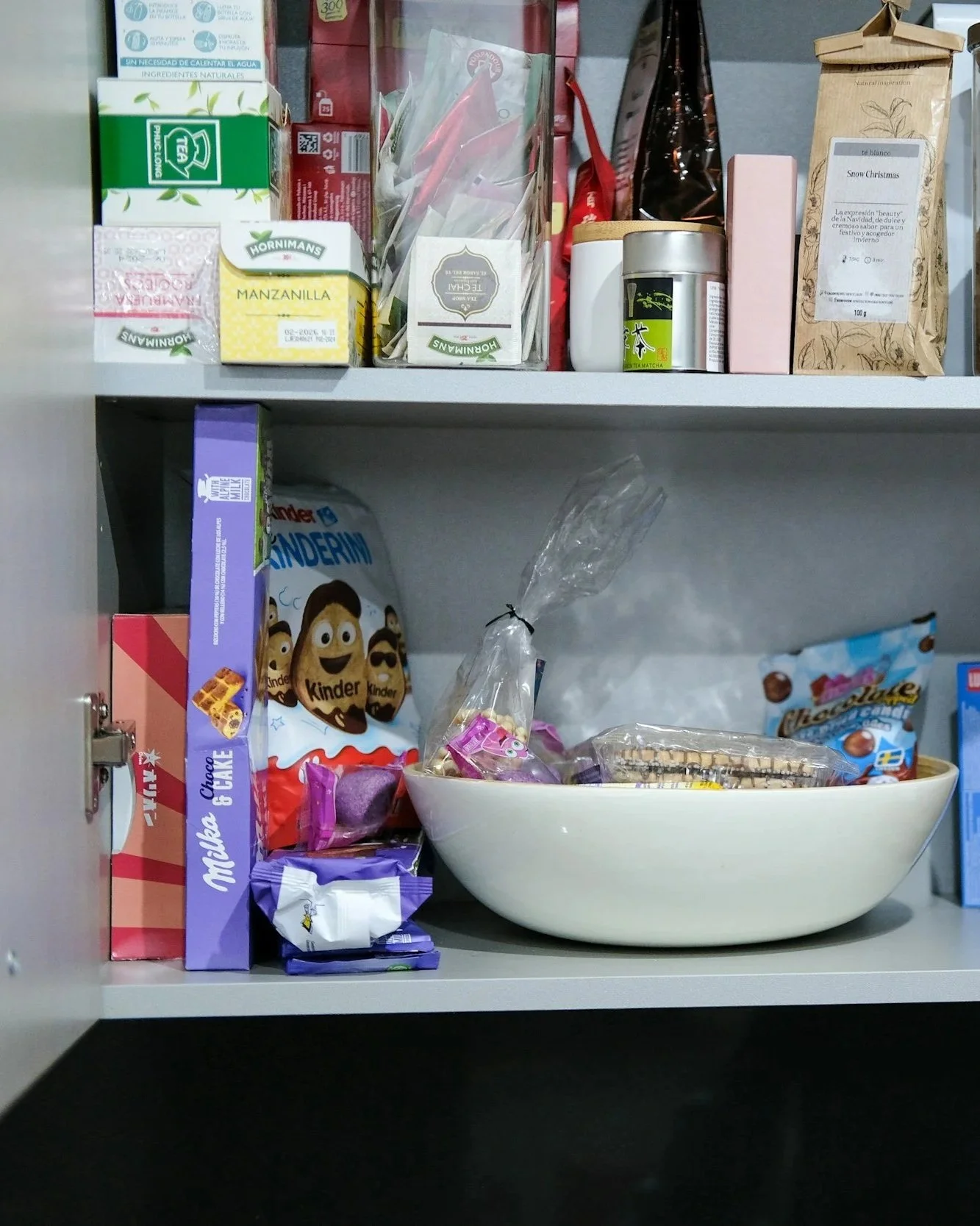
A good piece of chocolate or a favorite treat goes a long way when everything else about the day feels strange. So does entertainment that doesn't need a screen or a network: books already queued up, a deck of cards, a puzzle, board games, a coloring book and crayons for kids. These aren't just ways to pass time — they're what keeps everyone, especially children, feeling like themselves instead of feeling like something is wrong.
Familiar pleasures help create calm, cooperation, and a sense that the household is still functioning. They're not substitutes for water or safety, but they're part of what makes staying home through a disruption tolerable — for adults and kids alike.
What changed: Comfort is no longer whatever happens to fit in after the practical items. We're keeping a stash of treats, games, puzzles, music and books set aside specifically for an outage, so reaching for them feels less like making do and more like something the whole household can look forward to.
What I learned
At the end of 24 hours, I didn't conclude we needed a bunker, a generator, or a larger collection of specialized emergency products. I concluded we needed fewer unanswered questions.
We stopped assuming one large power bank would preserve the refrigerator. We stopped treating food as suitable merely because it was sold for emergencies. We gave every gallon of water more than one job on paper, before it had to perform those jobs in real life. We checked our backup systems, prepared for our phones becoming much less useful, and gave familiar comforts the formal place in our plan that they already occupy in our lives.
The test didn't make me want to prepare for the end of the world. It made me considerably better prepared for an inconvenient version of the world we already live in.
Publication safety note
Before using any fuel-burning stove, heater, lantern or generator, follow the product's current instructions and carbon-monoxide precautions. Ready.gov advises that generators, camp stoves and charcoal grills be used outdoors and at least 20 feet from windows; the Consumer Product Safety Commission says portable camping equipment should never be used inside a home unless specifically designed for enclosed-space use and includes instructions for that use. The FCC recommends conserving phone batteries, limiting non-emergency calls and trying text messages when networks are strained.
Sources: Ready.gov, "Power Outages"; U.S. Consumer Product Safety Commission, "Carbon Monoxide Fact Sheet"; FCC/FEMA, "Emergency Communications Tips."