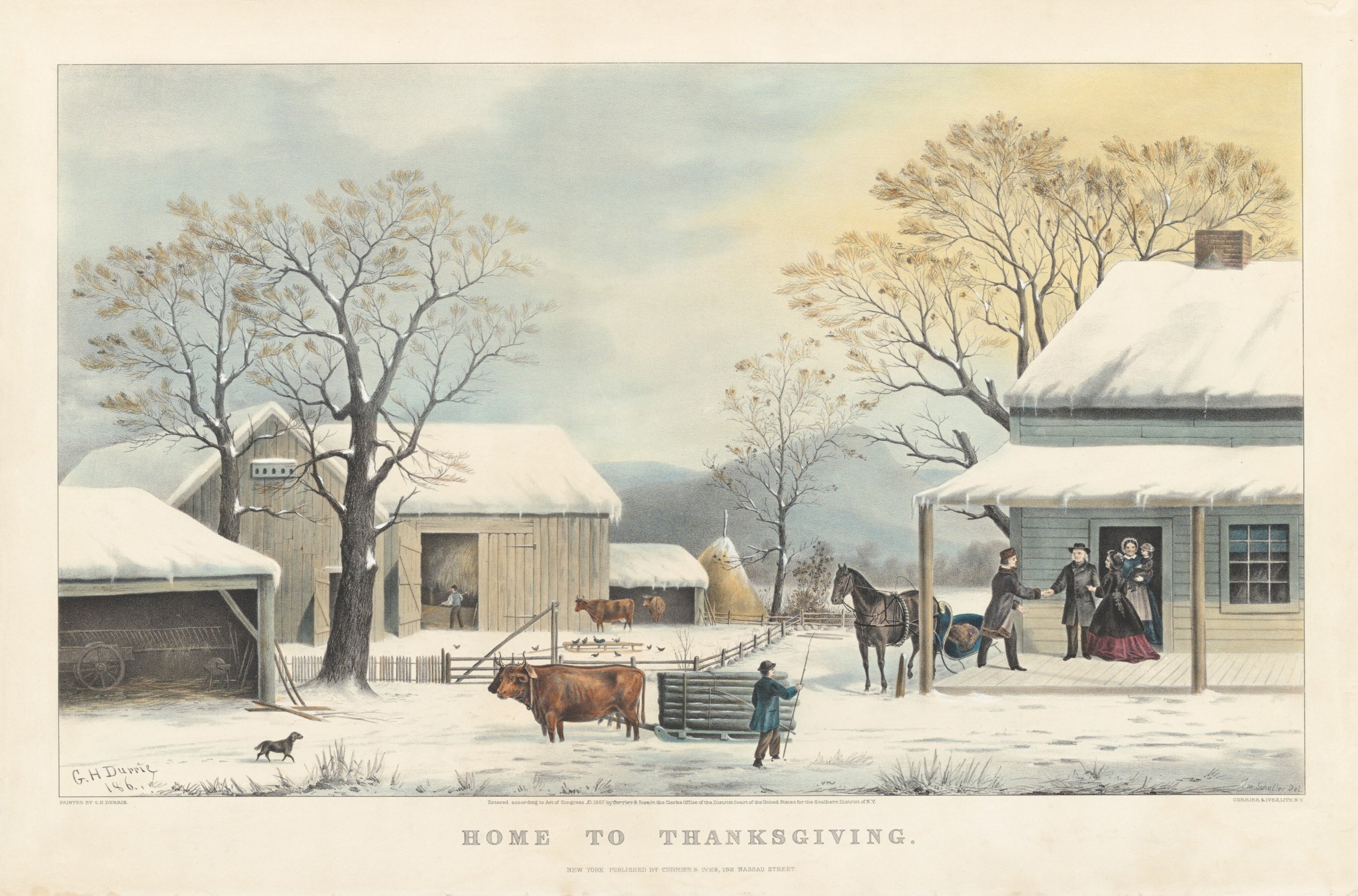
Currier & Ives, “Home to Thanksgiving,” 1867. National Gallery of Art.
Thanksgiving feels as if it has always been there, fixed on its Thursday in November like the turkey on its platter. It wasn’t. The holiday we gather for now exists largely because of one determined writer named Sarah Josepha Hale.
A New England Habit
Thanksgiving wasn’t Hale’s invention, of course. Beginning in the 1600s, New England’s governors proclaimed a day of thanks each year, choosing the date as they saw fit. It usually landed on a Thursday in November, but it could fall anywhere from September to December (and some years, not at all). The day itself was devoted to prayer and feasting for the harvest and the year’s blessings: church in the morning, then a big family dinner. It was a religious holiday, closer in spirit to a Sunday than to the Fourth of July.
As New Englanders moved west, they brought the custom along: New York adopted it in 1817, Michigan in 1824, and Ohio in 1839. The turkey, the pumpkin pie, the long trip home for dinner: all of it began as a New England tradition.
Who Was Sarah Josepha Hale?
Sarah Josepha Hale was born in New Hampshire in 1788. In 1822 her husband, David, died suddenly, leaving her with five children under the age of seven. To support her family, she turned to the one thing she had always done well: writing.
Her first novel, Northwood, came out in 1827 and described a New England Thanksgiving dinner, the holiday she had grown up with, in lavish detail. In 1830 she published Poems for Our Children, which included a little verse called “Mary’s Lamb.” You know it as “Mary Had a Little Lamb.” By 1837 she was editing Godey’s Lady’s Book in Philadelphia, which became the most widely read women’s magazine in the country. She held the job for forty years and retired at 89.
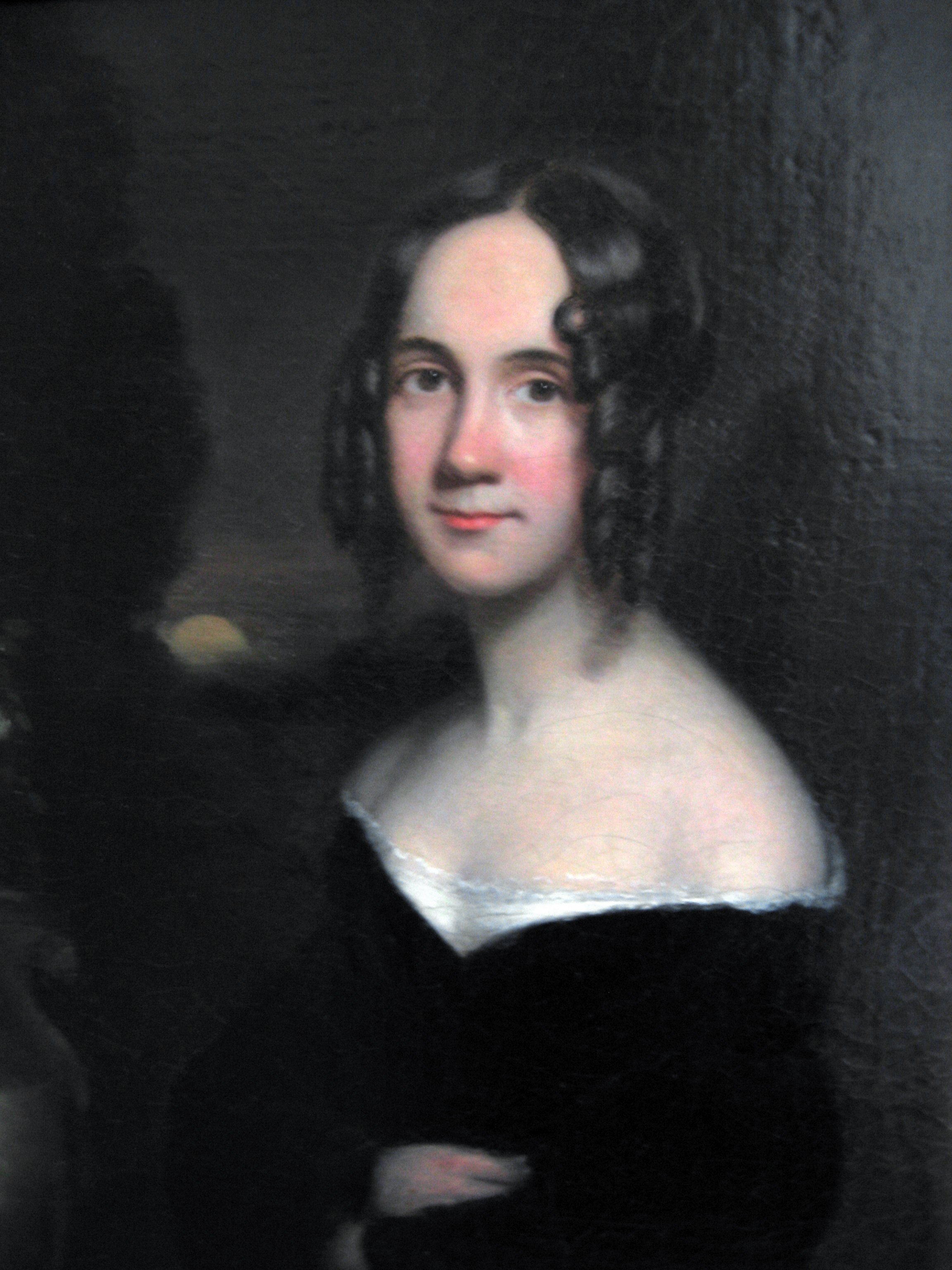
James Reid Lambdin, “Sarah Josepha Hale,” c. 1831. Richards Free Library, Newport, NH.
The Campaign
Hale believed a shared day of thanks could be just the thing to hold a growing, quarrelsome country together. Beginning in the late 1840s, she made the case in her magazine nearly every autumn, in editorials that tallied which states had come around. She also wrote letters, year after year for fifteen years, to the governors of every state and territory, to American diplomats and missionaries abroad, to naval commanders, and, by many accounts, to several presidents before Lincoln.
Slowly, it worked, at least in the North. By her own count, thirty states and three territories celebrated on the same day in 1859, the last Thursday in November. The South was another story. Many Southerners saw Thanksgiving as a Yankee holiday, even an abolitionist one, and when Missouri’s governor skipped it in 1855, a St. Louis paper wondered whether he considered it “a Yankee institution, full of fanaticism.” Opposition like this signaled a deeper and growing divide.
A Letter to Lincoln
By 1863 the country was at war with itself. Gettysburg had been fought that July. On September 28, Hale, then 74, wrote to President Lincoln from Philadelphia. Her approach was a practical one: waiting for every state to pass its own law would take years, she argued, but a presidential proclamation could act immediately. She asked that the day of thanks be made “a National and fixed Union Festival,” and she suggested the last Thursday in November.
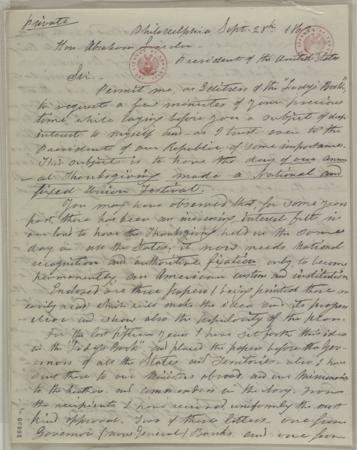
Sarah Josepha Hale to Abraham Lincoln, September 28, 1863. Library of Congress, Manuscript Division, Abraham Lincoln Papers.
Five days later, on October 3, Lincoln issued a proclamation, drafted by Secretary of State William Seward, setting aside the last Thursday of November as a national day of thanksgiving. Her letter survives in Lincoln’s papers at the Library of Congress. Every president since has issued a Thanksgiving proclamation.
Franksgiving
Think Christmas creep is a modern problem? For seventy-six years, Thanksgiving did exactly what Hale intended, bringing the entire country to the table on the same day. Then Christmas shopping came knocking. In 1939, November had five Thursdays, which put Thanksgiving on the 30th and left only about 24 shopping days until Christmas. At the time it was considered unseemly for stores to start their Christmas sales before Thanksgiving, so Fred Lazarus Jr., the head of Federated Department Stores (later Macy’s, Inc.), asked President Roosevelt to move Thanksgiving up a week. And he did.
Americans were not amused. A Gallup poll found 62 percent opposed, smaller shopkeepers grumbled that only the big stores would benefit, and plenty of states simply kept the old date, so for a few years the country celebrated on two different Thursdays. Critics dubbed the new one “Franksgiving.” (A Commerce Department survey later found it hadn’t done much for sales anyway.) In 1941, Congress settled the matter for good with the fourth Thursday of November, which, conveniently, guarantees retailers at least a month of Christmas shopping.
Same Day, Different Tables
Hale’s wish was a simple one: that everyone in the country give thanks on the same day, wherever they happened to be. More than 160 years later, that’s still the heart of it. (And if your people are scattered this year, my Better Ways piece Present in Spirit has a few ideas for sharing the day from afar.)